

Our friendly, knowledgeable team are ready to chat
Call us: 01784 222 300
Apply now: Download application form
Looking for a role? Send your CV:
Send CV: cv@esfapprenticeships.co.uk
GET IN TOUCH



Our friendly, knowledgeable team are ready to chat
Call us: 01784 222 300
Email us: info@esfapprenticeships.co.uk
GET IN TOUCH

For delegates

For employers
Benefits
Course content
How will I learn?
Course dates
Eligibility
FAQs
Because communication is at the heart of all learning and behaviour, this specialist pathway equips you with the deep, practical expertise to become an SLCN expert
You will gain invaluable insight and experience of working within a classroom setting to support the teacher and help all pupils thrive. You’ll also learn how to look past a child's behaviour to understand what they are trying to communicate, using Elklan’s practical, proven tools.
On completion of your programme, you will achieve the Level 3 Teaching Assistant Apprenticeship plus Elklan’s Level 3 Award in Speech and Language Support, equipping you with a highly sought-after dual qualification and the practical tools to make a real impact in the classroom.

Funding for this apprenticeship
£0
Cost to delegate
£7,000
Funding band for this apprenticeship
QUALIFICATION

Level 3 Teaching Assistant Apprenticeship
STUDY STYLE

Self-paced online. Live virtual workshops
DURATION

13 - 15 months
DEDICATED TUTORING

One-to-one tuition from experienced teachers
SEND MASTERCLASSES

Learn from SEND experts and extend your knowledge
ASSESSMENT

Written portfolio & practical observations.
Professional discussion
Benefits for learners
Put what you learn into practice from day one with practical projects to develop your skills and confidence in the classroom. You will achieve the industry-recognised Elklan Level 3 Speech and Language Support qualification.
School leavers or if you are new to education
- Paid employment in a school that could lead to a full-time role
- Gain a nationally recognised qualification
- Learn all you need to know to be a qualified teaching assistant
Existing TAs ready to upskill
- Build confidence in the role
- Deepen your knowledge of the psychology of learning
- Understand the link between language, behaviour, and learning, giving you the tools to unlock a child’s full potential.
- Sharpen your professional communication skills
-
Learn how to adapt classroom resources and use visual tools to create a communication-friendly environment for all learners
- Lay the groundwork to become a designated Speech and Language Champion within your school, or progress to the Level 5 Specialist TA role, gain HLTA status or become a Higher Level Communications Practitioner.
Course content
This programme focuses on giving you hands-on classroom experience, with dedicated support every step of the way. Through real-world activities and expert-led workshops, you will develop the specialised skills needed to build a communication-friendly environment.
Areas of development include:
- Supporting neurodivergent learners (including Autism, ADHD, and Dyslexia) through the lens of their unique speech, language, and communication profiles
- Exploring typical and atypical child development theory
- Exploring how the National Curriculum is structured and how it applies to your role
-
Exploring your school’s SEND and communication policies to understand how to put them into action when supporting your pupils
- Examining Child Safeguarding Case Reviews and how they change policies within school
- Mastering strategies to modify adult language, ensuring classroom instructions are accessible to all learners
- Developing assessment skills so you can provide valuable information about children’s progress to teachers
- Adapting activities and lessons to include all types of learners
- Using the 'Communication Chain' to identify where a child’s speech or understanding is breaking down
-
Learning how to use technology and communication tools to support non-verbal or low-confidence communicators
- Implementing robust visual communication tools, including symbols, visual timetables, and structured signing systems

"Since starting this apprenticeship, I've become much more confident in adapting resources and supporting children - especially those with additional needs.
Overall, the support from tutors and the wider ESF team has been exceptional. A truly outstanding training experience. Thank you."
The Level 3 Teaching Assistant role, with a focus on Speech, Language and Communication
The role may involve:
- Providing teaching support in small groups or working 1-to-1 with individual pupils to help them access the lesson and aid the teacher
- Promoting positive behaviour patterns, raising self-esteem, and encouraging all children to become independent learners
- Liaising with the teacher to understand the objectives of each session
- Assisting the teacher with observations and monitoring the progress of children, both academically and socially
- Adapting lessons using communication-friendly resources and visual tools to help all pupils understand and engage with their learning
Choosing your Elklan pathway
Choose the Elklan pathway that best fits your current setting. Explore the sections below to see what each option covers.
1. Elklan 5–11s pathway (Primary)
- Identify SLCN: Spot a range of speech, language, and communication needs early.
- Apply Practical Strategies: Use proven, everyday tools to boost communication across all subjects.
- Adapt Classroom Practice: Confidently change how lessons are delivered so pupils with SLCN can succeed.
- Boost Achievement: Improve pupil participation, classroom confidence, and overall results.
- Create Communication-Friendly Spaces: Help embed communication-supportive practices across your whole school.
2. Elklan 11–16s pathway (Secondary)
- Understand Teen Communication: Learn how speech, language, and communication skills develop during adolescence.
- Support Learning Differences: Identify and support teenagers with unique communication and learning needs.
- Boost Literacy & Listening: Use inclusive teaching strategies to improve students' listening, understanding, and expressive language.
- Connect Language & Behaviour: Understand and strengthen the vital link between language, literacy, school attainment, and classroom behaviour.
- Build Independent Speakers: Support older students to become confident, self-advocating communicators as they grow.
3. Elklan 3–5s pathway (Early Years)
- Identify a wide range of speech, language and communication needs (SLCN) in early years children.
- Apply practical, play-based strategies to develop communication in everyday routines and activities.
- Confidently adapt the learning environment to support children with SLCN.
- Strengthen children’s attention, listening, vocabulary, understanding and social interaction.
- Embed communication-supportive practice across early years settings to improve outcomes for all.
4. Elklan Severe Learning Difficulties pathway
- Utilise practical techniques, such as Information Carrying Words (ICWs), to help pupils process and follow spoken instructions without feeling overwhelmed.
- Create low-demand, highly engaging environments where communication can flourish.
- Implement play-based strategies to build foundational attention and listening skills.
- Use modelling and scaffolding techniques to support sentence building and expressive communication.
- Evaluate and adapt classroom practices, resources, and routines.
SEND Masterclasses
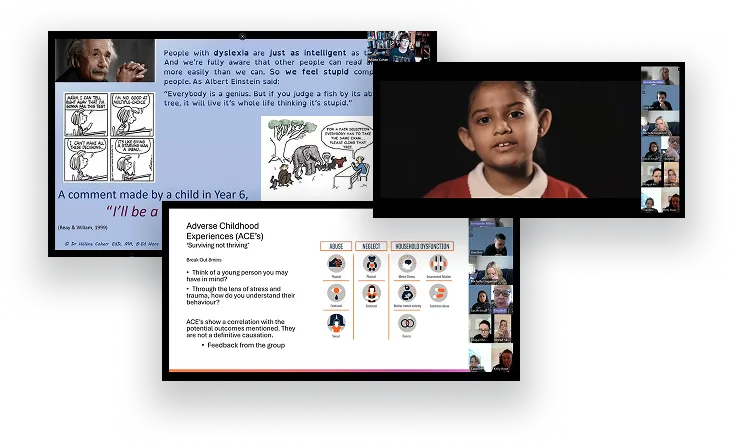
Exclusive invitations to interactive sessions led by an expert in SEND and inclusion.
Benefit from high-impact sessions for schools and nurseries. You’ll be brought up to date in various aspects of SEND and mental health by leading speech and language therapists, dyslexia assessors, educational psychologists, autism specialists and a range of other experts.
- Held every month during term time (attendance optional)
- 2-3 hours presentation and interaction
- Your chance to ask the expert!
- Downloadable resources
- Recordings available on-demand
How will I learn?
The programme runs for 13-15 months during which time you will study through a variety of means including:
- Online learning – study flexibly at a time and place that suits you on our engaging ESF Learn platform.
- Live interactive group sessions - held every two weeks over Zoom with your dedicated tutor.
- Self-directed project work – apply new knowledge and skills through practical projects and research in your setting. Build a portfolio of evidence that will help embed your learning and allow you to make a positive impact from the very start.
- Mentoring and regular progress reviews – with your dedicated ESF Tutor and in-school mentor to set targets, document progress and celebrate successes.
Eligibility
We'd love to hear from applicants who are:
- Good with people – you’ll need the ability to build positive relationships with students, staff, and parents
- Effective communicators – clear and confident verbal and written communication skills
- Team players – the role needs a good team player who is passionate about supporting learning
Qualifications and other criteria:
No qualifications are required if you are aged 19+ (although it is desirable to have maths and English GCSE at Grade 4/C or above)
For apprentices aged 16-18 only:
- Grade 4/5 in GCSE English and maths (equivalent to Grade C and above)
- If you don’t hold the above, you must work towards Level 2 Functional Skills as part of your apprenticeship.
- Functional Skills are valuable qualifications. Find out more about the support we offer.
- You must have held residency in England for the last three years and have right to work in the UK
Course start dates
Apply to start: in September 2026
Learner FAQs
What is the career progression for this role?
- Employment within a school as a Teaching Assistant (if you aren't already permanently employed) - in many cases this could be in the school where you have been training.
- HLTA (Higher Level Teaching Assistant). If your school is in agreement, you could go on to undertake the Level 5 Specialist Teaching Assistant Apprenticeship with optional HLTA status as an add-on.
- Advance your Speech and Language knowledge and skills by becoming a Higher Level Communications Practitioner.
- Further study to become a Teacher. You will need QTS in order to become a Teacher in a state school. You can complete either a PGCE or a degree that includes QTS, or choose the Schools Direct route.
- Teachers in the UK need GCSEs at grade 4 (C) or above in English and maths (and science if you want to teach at primary level) as well as a bachelor’s degree in any subject. Alternatively, if you don’t already have a degree, you could opt for a Teacher Degree Apprenticeship (Note: A-levels will be required).
How much release time is required for this apprenticeship?
We have developed a blended teaching and learning model, proven to work for busy school leaders, teachers and TAs.
Scheduled release time:
- Weekly half-day release with alternating weeks of live workshops and applied practice tasks. Workshops are led by experienced tutors and you'll also have the chance to share ideas with other apprentices TAs from the course.
Flexible release time:
- You will have access to our self-paced online learning platform full of resources, activities, research and ideas.
- You will also complete practical projects that will be carried out in a classroom environment and will be of direct benefit to your pupils and your school.
- You will also need to have release time for regular progress reviews with your ESF tutor and school mentor in order to set new targets and celebrate success. These are short sessions that will take place every 12 weeks (as a minimum).
- Our SEND Masterclasses are 2-3 hour live online sessions held every month during term time. Attendance is optional and recordings are also available.
How much are Teaching Assistants apprentices typically paid?
As a Level 3 Teaching Assistant apprentice you should be paid at least the National Minimum Wage for apprentices, with many schools offering a higher hourly rate.
Many vacancies are advertised between £11k - 15k per year. It's also important to note that pay for teaching assistant apprentices can sometimes be "pro-rata," meaning the advertised annual salary is for a full-time, year-round position, and the actual take-home pay will be adjusted to reflect term-time only working hours. Take a look at our Vacancies page to view open positions in your area.
Salaries can vary significantly based on the apprentice's age, the location of the school, and the specific terms of the apprenticeship agreement.
What our apprentices say

“Gained more confidence in my role and developed my personal skills”
“Since completing my Level 3 teaching assistant SEND apprenticeship, I have gained more confidence in my role and have developed my personal skills. My tutor gave me full support throughout my course and was always available when I needed any help with my assignments.
I am so grateful to ESF Apprenticeships for giving me the opportunity to progress in my role and develop my personal skills.”

“The support from ESF Apprenticeships has been amazing”
“I work in a SEN secondary school and I love it! I’ve learned so much from my apprenticeship – all of it relevant to my job. I am an older learner and changed careers later on. I did wonder if I could learn at my age but I absolutely can and the support from ESF Apprenticeships has been amazing!”

“A great foundation for working in a school”
“I am really enjoying the programme, I think it has given me a great foundation for working in a school, specifically with special needs children. I find a lot of the research tasks very interesting and they provide a lot of in-depth knowledge and skills that I would not know about if I had not taken this course.”
Study this apprenticeship with us
Complete our short online form and we’ll be in touch with information and application instructions.
Next apprenticeship start dates: September 2026
Benefits
Course content
Levy funding
Employer commitments & FAQs
With communication at the heart of all learning and behaviour, empower your team with specialist Speech and Language expertise
Funding for this apprenticeship
£0
Cost to delegate
£7,000
Funding value for this apprenticeship
£350
Maximum cost to non-levy paying schools
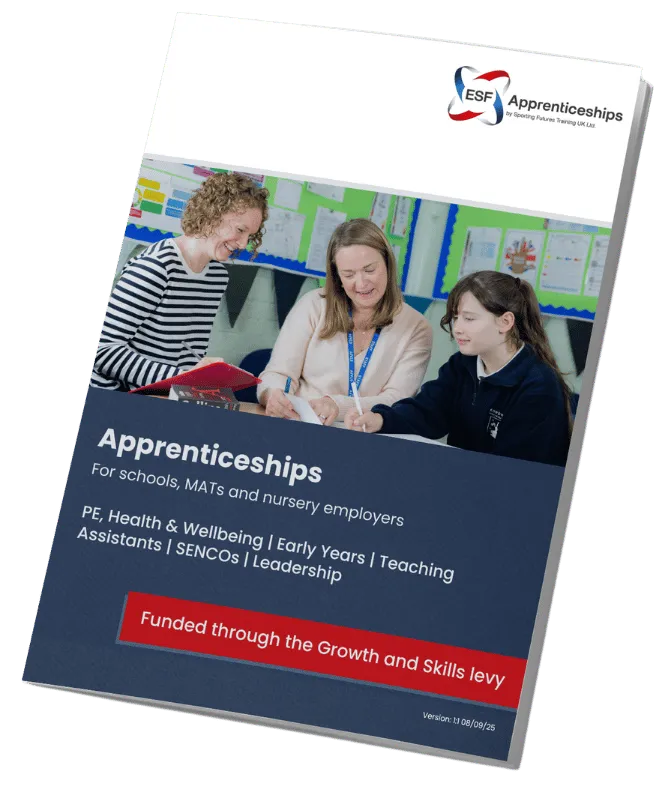
Funding for this apprenticeship
QUALIFICATION
Level 3 Teaching Assistant Apprenticeship
STUDY STYLE
Self-paced online. Live virtual workshops
DURATION
13 - 15 months
DEDICATED TUTORING
One-to-one tuition from experienced teachers
SEND MASTERCLASSES
Learn from SEND experts and extend your knowledge
ASSESSMENT
Written portfolio & practical observations. Professional discussion
Benefits for employers
- Increase teaching assistant capacity: by hiring an extra pair of hands on a short-term or permanent basis
- Upskill your current teaching assistants: increase their confidence and knowledge in areas such as scaffolding support, behaviour management, curriculum expertise and SEND
- Improve targeted support in SEND: Gain a member of staff with up-to-date training in areas like speech, language, communication needs, ADHD, dyslexia, and autism
- Help with activities, interventions, pre-teaching, formative assessments: Level 3 TAs can use their newly acquired skills to be of even more value to teachers and SENCOs (as required) in your setting
- Introduce fresh ideas: Level 3 apprentices have the chance to learn on the job, network with other TAs and share fresh ideas about best practice, particularly when it comes to SEND
Increase capacity and employ an apprentice
Our free of charge hiring service includes job advert creation and placement, applicant screening and first-round telephone interviews. We’ll also help with logistics and apprenticeship onboarding.
Upskill your existing team
Bring new skills and knowledge into your organisation and improve staff retention with on-the job training and career progression pathways for staff. Delegates will undertake a series of practical projects that will add value to your school. They can also share up-to-date knowledge with other members of your team.

"At present six of our staff are undertaking Level 3 Teaching Assistant Apprenticeships. They relish the opportunity to engage in fortnightly professional development which in turn is helping them to support our pupils to an even higher standard.
They are always talking to one another about their studies, sharing ideas, top tips and good practice and it has been so rewarding to see our staff engaging in such a high-quality qualification."
Course content:
The programme is all about hands-on learning; participants will build a portfolio as they study. They will be undertaking activities such as researching your school’s policies, looking at and understanding how resources can be used to support all learners in the classroom and helping teachers to plan tasks.
Areas of development include:
- Supporting children with Autism, Dyslexia, Speech, Language and Communication Needs (SLCN), and ADHD
- Exploring typical and atypical child development theory
- Exploring how the National Curriculum is structured and how it applies to your role
- Investigating key aspects of your school’s SEND policy and how this relates to your practice
- Examining Child Safeguarding Case Reviews and how they change policies within schools
- Managing professional relationships and mastering better communication strategies
- Developing assessment skills so you can provide valuable information about children’s progress to teachers
- Adapting activities and lessons to include all types of learners
- Using behaviour support strategies effectively in your setting
- Using technology to assist learners, especially those with SEND
- Learn how to use a range of communication strategies, with signposted Makaton and BSL resources
Choose an Elklan pathway for your setting
Explore our tailored Elklan pathways to see how the curriculum aligns with your specific educational setting
1. Elklan 5–11s pathway (Primary)
- Identify SLCN: Spot a range of speech, language, and communication needs early.
- Apply Practical Strategies: Use proven, everyday tools to boost communication across all subjects.
- Adapt Classroom Practice: Confidently change how lessons are delivered so pupils with SLCN can succeed.
- Boost Achievement: Improve pupil participation, classroom confidence, and overall results.
- Create Communication-Friendly Spaces: Help embed communication-supportive practices across your whole school.
2. Elklan 11–16s pathway (Secondary)
- Understand Teen Communication: Learn how speech, language, and communication skills develop during adolescence.
- Support Learning Differences: Identify and support teenagers with unique communication and learning needs.
- Boost Literacy & Listening: Use inclusive teaching strategies to improve students' listening, understanding, and expressive language.
- Connect Language & Behaviour: Understand and strengthen the vital link between language, literacy, school attainment, and classroom behaviour.
- Build Independent Speakers: Support older students to become confident, self-advocating communicators as they grow.
3. Elklan 3–5s pathway (Early Years)
- Identify a wide range of speech, language and communication needs (SLCN) in early years children.
- Apply practical, play-based strategies to develop communication in everyday routines and activities.
- Confidently adapt the learning environment to support children with SLCN.
- Strengthen children’s attention, listening, vocabulary, understanding and social interaction.
- Embed communication-supportive practice across early years settings to improve outcomes for all.
4. Elklan Severe Learning Difficulties pathway
- Utilise practical techniques, such as Information Carrying Words (ICWs), to help pupils process and follow spoken instructions without feeling overwhelmed.
- Create low-demand, highly engaging environments where communication can flourish.
- Implement play-based strategies to build foundational attention and listening skills.
- Use modelling and scaffolding techniques to support sentence building and expressive communication.
- Evaluate and adapt classroom practices, resources, and routines.
Levy funding
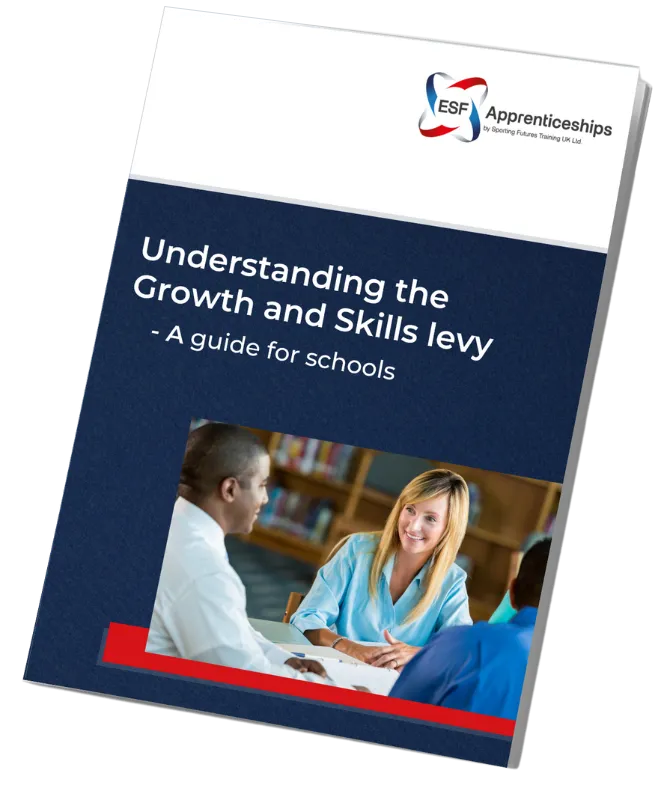
The Growth and Skills Levy (formerly known as the Apprenticeship Levy) is essentially a fund set up to support the training and development of staff through apprenticeships. Funds are collected and put into a digital account for employers.
- Who pays it? Anyone with an annual wage bill over £3 million.
- How does it benefit your school? The money in this account can be used to pay for apprenticeship training for both your existing staff and any new apprentices you hire. Apprenticeships are available for anyone aged 16 and over, from Level 2 right up to Level 5, covering a wide range of skills.
Employer FAQs
How much release time is required for this apprenticeship?
We have developed a blended teaching and learning model, proven to work for busy school leaders, teachers and TAs.
Scheduled release time:
- Weekly half-day release with alternating weeks of live workshops and applied practice tasks. Workshops are led by experienced tutors and you'll also have the chance to share ideas with other apprentices TAs from the course.
Flexible release time:
- Delegates will have access to our self-paced online learning platform full of resources, activities and ideas.
- They will also complete practical projects that will be carried out in a classroom environment and will be of direct benefit to your pupils and your school.
- They will also need to have release time for regular progress reviews with their ESF tutor and school mentor in order to set new targets and celebrate success. These are short sessions that will take place every 12 weeks (as a minimum).
- Our SEND Masterclasses are 2-3 hour live online sessions held every month during term time. Attendance is optional, and recordings are also available.
How do I find out whether my school is eligible for levy funding?
If you pay the Growth and Skills levy (formerly known as the Apprenticeship Levy), your bursar, business manager, or finance team should be able to tell you the next steps.
Local Authority schools can access funding from their council's shared levy pot, even if their payroll is below the threshold, by contacting the Local Authority's Apprenticeship Team.
- Multi-academy Trusts with a wage bill over £3m should contact their central finance or HR team.
- Voluntary Controlled schools should approach their Local Authority.
- Voluntary-aided and Foundation schools (non-levy paying) can access 95% government funding, with further support potentially available from the Local Authority or via levy transfer.
What happens if we are not a levy paying school?
If you don’t pay the Growth and Skills levy then the Government will fund 95% of the apprenticeship and you will need to commit to paying 5% of the fee.
Larger organisations can support other organisations, by making up to 50% of their annual levy funds available to eligible employers who need financial assistance with apprenticeships. ESF Apprenticeships should be able to support your organisation to fund the whole cost this apprenticeship using another organisation's unused funds via a process known as Levy Transfer.
We can provide more information if you are interested in pursuing this route.
What are my obligations as an employer?
- You'll need to provide a formal employment contract covering the duration of the apprenticeship
- An apprentice must be paid at least the minimum apprenticeship wage in their first year of learning
- Apprentices aged 19+ must be paid at least the minimum wage for their age group in their second year of learning
- You must assign a workplace mentor who will participate in termly progress reviews and complete a final "Employer Review" assessing the apprentice's professional behaviours. Apprentices will gain experience through hands-on tasks and research projects, with much of this learning occurring in the classroom or where PE sessions are taking place. Mentors will also need to carry out some observations during the course of the apprenticeship.
- Mentors will need to support the end-point assessment process by attending a "gateway meeting" and assisting with planning the assessment day, which typically takes only a few hours.
Who should mentor this apprentice?
Over the years we’ve seen a variety of different people mentor Level 3 Teaching Assistants, including SENCOs and classroom teachers.
A good is someone who provides guidance, support, and encouragement to help apprentices succeed academically and personally. They are effective communicators, active listeners, and role models who foster a positive and trusting relationship with their learner. Key qualities include empathy, patience, and a genuine desire to help students grow.
See all >


Case Study
Manor Fields Primary School
“The support we've had from ESF has been so positive and so worthwhile. They have really gone the extra mile for my staff and care about them as individuals - the impact on staff confidence has been transformative.”


Case Study
Knebworth Primary and Nursery School
“When we were looking for a training provider to support us with upskilling current staff, ESF Apprenticeships seemed the perfect choice! They came highly recommended by other primary schools in the area. It has been so rewarding to see our staff engaging in such a high-quality qualification.”


Case Study
Melbourn Primary School
"I'd definitely recommend the course to other Headteachers. It's been an excellent way to give staff an opportunity to develop their skills when they're still in school. We are seeing the benefits every day for our children."
Develop your workforce
Complete our short online form and we’ll be in touch to discuss your needs.
Hire an apprentice or upskill staff: Next course start dates September 2026
Other apprenticeships you might be interested in

NEW HIRE / UPSKILL
Level 2 Community Activator
A Community Activator supports the PE team to promote, deliver, and inspire children with fun, inclusive activities. You’ll help nurture a positive environment and engage pupils in sporting initiatives, such as the Daily Mile, after-school clubs and more.

NEW HIRE / UPSKILL
Level 3 Teaching Assistant with a SEND focus
Suitable for both new and existing TAs, this programme covers both theory of childhood development and practical skills to support teachers. Provides foundational knowledge of how to support children with SEND.

NEW HIRE / UPSKILL
Level 3 Teaching Assistant with a PE, Health & wellbeing focus
Develops knowledge and understanding of how to plan, differentiate and deliver high-quality PE lessons, as well as the skills and knowledge required to be an effective “all-round” teaching assistant.