
Meet Sarah Ross:
Studying our Level 3 Teaching Assistant Apprenticeship
Changing careers after twenty years might seem a daunting prospect, but for Sarah Ross, a Teaching Assistant at Woolenwick School, it was a necessary step toward finding a role with
greater purpose.
We sat down to discuss her journey from retail management to education. She told us about how upskilling through the Level 3 Teaching Assistant Apprenticeship has transformed her confidence in the classroom and the support she offers learners with SEND, as well as her ability to communicate with parents.
Can you tell us a bit about your background and what inspired you to switch careers to education?
Sarah: I used to work in catering and hospitality, when I was younger and then from there I was a
retail manager for Next for twenty years.
Just after COVID, like so many of us, I started to really look at what I was doing with my life. During the pandemic I was classed as a key worker but so too were the people going in to teach our kids in schools and that contrast was suddenly thrown into focus. Selling jeans just
had no meaning to me anymore; I wanted to do more and give something back.
Education has always been a passion of mine, and the school I am currently in is one that all
four of my children have attended. I absolutely loved it as a parent. I saw a teaching assistant position advertised that required no experience, and I thought, Do you know what? I’m just going to go for it.
You decided to undertake an apprenticeship after starting the role. Why did you choose that route?
Sarah: I’m the kind of person who always wants to push myself harder. All of my career prior to this had been in management, so I was used to being a leader and making decisions. Suddenly,
I was in a role where I had no experience other than raising my own children. Although I
picked it up quickly, I wanted to develop my skills and progress as far as I could.
I approached the Senior Leadership Team and asked, How can I improve? How can I give you more? Between us, we found that the apprenticeship would be a perfect fit. The headteacher actually suggested it; he was mindful that I had been out of formal education for along time, so
I had to relearn how to learn academically. It was a solid starting point that allowed me to keep
doing my job while learning new skills that are beneficial to the school.
The school had also already taken on PE apprentices so they knew quite a bit about how apprenticeships work and how fulfilling they can be.
You selected the Level 3 Apprenticeship with a focus on SEND support. What drove that choice?
Sarah: I added the SEND element because I am very aware that there is so much more need coming through schools now. In my first year alone, I encountered five different levels of
SEND needs within one class—five children who were very different. At the time, I didn't fully understand how best to support them.
The apprenticeship has enabled me to understand what resources they need, how to manage their transitions, and what adjustments are required. Ironically, I also have two children of my own on the pathway to being assessed, so it has helped me understand them better, too.
How has this training impacted your confidence and your work with the children?
Sarah: It feels amazing. Being able to support these children and seeing the difference I’m potentially making in their lives is incredible. For example, I run a phonics intervention with a little boy I’ve been with since Reception. One of his parents came to watch a session and was so positive, noting that seeing him sit and engage for 15 minutes was something they’d never achieved at home. I stepped away thinking, I’ve helped there, I’ve got him on the right path.
I also remember a little girl who used to cry when asked to write any sounds; she was so nervous. By the end of the year, she was writing full sentences and was confident doing it. Seeing that progression makes you realise you are actually making a difference.
My relationships with the children are so strong and that comes from my confidence in what I’m doing - something that the apprenticeship has been absolutely integral to.
Are there specific skills and knowledge you’ve picked up from the course?
Sarah: Understanding the curriculum and assessment has been key. I understand why we are teaching what we are teaching, which helps me support the planning. It has built my confidence to the point where I can now lead classes to cover teacher PPA. I don’t think I would have had the confidence to deliver phonics sessions if I hadn't looked at the theory behind it.
The masterclasses have also been amazing—specifically the trauma workshop. It was a real eye-opener. I realised that trauma comes in so many facets, and looking at children you can sometimes "see it" in them. That workshop gave me strategies to support them better.
Why do you think it’s important to encourage alternative routes into careers in education, including for career-changers like yourself?
Sarah: I think children need to experience people from all walks of life. I work with a fantastic teacher who is younger than me and doesn't have children yet. She sometimes asks me my opinion based on my parenting experience or life experience.
Because I’ve been in management, it’s a natural part of my personality to want to advise or assist. I’m comfortable talking to parents now because the course has given me the educational knowledge to back up my advice.
I recently had a long chat with a parent whose daughter was struggling with reading and confidence. Because of the apprenticeship, I could explain the child development side of things, why she is learning in that way and what might be impacting her. I felt I could deliver that advice with confidence.
What would you say to someone who is on the fence about starting an apprenticeship later in their career?
Sarah: I would say absolutely go for it. To me, it’s a no-brainer. Yes it’s probably going to challenge you, but you get so much support.
Someone like me, who had no previous experience, might assume you need a degree to get into a career in education. But an apprenticeship opens the door. I have four children and a very busy life - I can’t necessarily just stop working and go and do a degree.
With an apprenticeship, you learn on the job, you do it practically, but you get the theory and support in the background. This opportunity makes me feel like, actually, this is possible. I
may be 47, but it doesn’t mean everything is over.
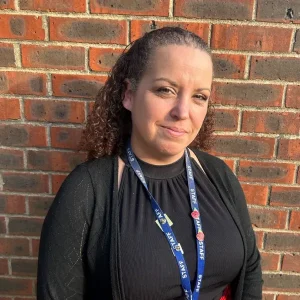
This opportunity makes me feel like, actually, this is possible. I may be 47, but it doesn’t mean everything is over. I may go on to become a teacher, especially now there’s a new apprenticeship pathway for this. I still have fifteen-plus years of work ahead of me, and I want to make them count.....
Find out more
Feeling inspired? If you are interested in landing your first job as a TA apprentice, or if you are already in the role and keen to upskill, take a look at the apprenticeship programmes on offer.